The company's first offerings, the 350GT and 400GT, were noted for their refinement, power, and comfort. Lamborghini gained wide acclaim in 1966 for the Miura sports coupé, which established mid-engine design as the standard layout for high-performance cars of the era. After a decade of rapid growth, hard times befell the company in the mid-1970s, as sales plunged in the wake of the 1973 world financial downturn and oil crisis. After a bankruptcy and three changes in ownership, Lamborghini came under the corporate umbrella of the Chrysler Corporation. The American company failed to return the automaker to profitability and sold it to Indonesian interests in 1994. Lamborghini's lack of success continued through the 1990s, until the company was sold in 1998 to AUDI AG, a subsidiary of the Volkswagen Group, a German automotive concern. Audi's ownership marked the beginning of a period of stability and increased productivity for Lamborghini, with sales increasing nearly tenfold over the course of the 2000s. A world financial crisis in the late 2000s saw Lamborghini's sales cut in half, leading CEO Stephen Winkelmann to predict continued poor sales for supercar makers.
Monday, September 13, 2010
Lamborghini Cars review
Automobili Lamborghini S.p.A.,[Notes 1] commonly referred to as Lamborghini (pronounced [lamborˈɡini] ( listen)), is an Italian automaker based in the small township of Sant'Agata Bolognese. The company was founded in 1963 by manufacturing magnate Ferruccio Lamborghini, who set out to create a refined grand touring car.
The company's first offerings, the 350GT and 400GT, were noted for their refinement, power, and comfort. Lamborghini gained wide acclaim in 1966 for the Miura sports coupé, which established mid-engine design as the standard layout for high-performance cars of the era. After a decade of rapid growth, hard times befell the company in the mid-1970s, as sales plunged in the wake of the 1973 world financial downturn and oil crisis. After a bankruptcy and three changes in ownership, Lamborghini came under the corporate umbrella of the Chrysler Corporation. The American company failed to return the automaker to profitability and sold it to Indonesian interests in 1994. Lamborghini's lack of success continued through the 1990s, until the company was sold in 1998 to AUDI AG, a subsidiary of the Volkswagen Group, a German automotive concern. Audi's ownership marked the beginning of a period of stability and increased productivity for Lamborghini, with sales increasing nearly tenfold over the course of the 2000s. A world financial crisis in the late 2000s saw Lamborghini's sales cut in half, leading CEO Stephen Winkelmann to predict continued poor sales for supercar makers.
lamborghini
lamborghini
lamborghini
lamborghini
lamborghini
lamborghini
The company's first offerings, the 350GT and 400GT, were noted for their refinement, power, and comfort. Lamborghini gained wide acclaim in 1966 for the Miura sports coupé, which established mid-engine design as the standard layout for high-performance cars of the era. After a decade of rapid growth, hard times befell the company in the mid-1970s, as sales plunged in the wake of the 1973 world financial downturn and oil crisis. After a bankruptcy and three changes in ownership, Lamborghini came under the corporate umbrella of the Chrysler Corporation. The American company failed to return the automaker to profitability and sold it to Indonesian interests in 1994. Lamborghini's lack of success continued through the 1990s, until the company was sold in 1998 to AUDI AG, a subsidiary of the Volkswagen Group, a German automotive concern. Audi's ownership marked the beginning of a period of stability and increased productivity for Lamborghini, with sales increasing nearly tenfold over the course of the 2000s. A world financial crisis in the late 2000s saw Lamborghini's sales cut in half, leading CEO Stephen Winkelmann to predict continued poor sales for supercar makers.
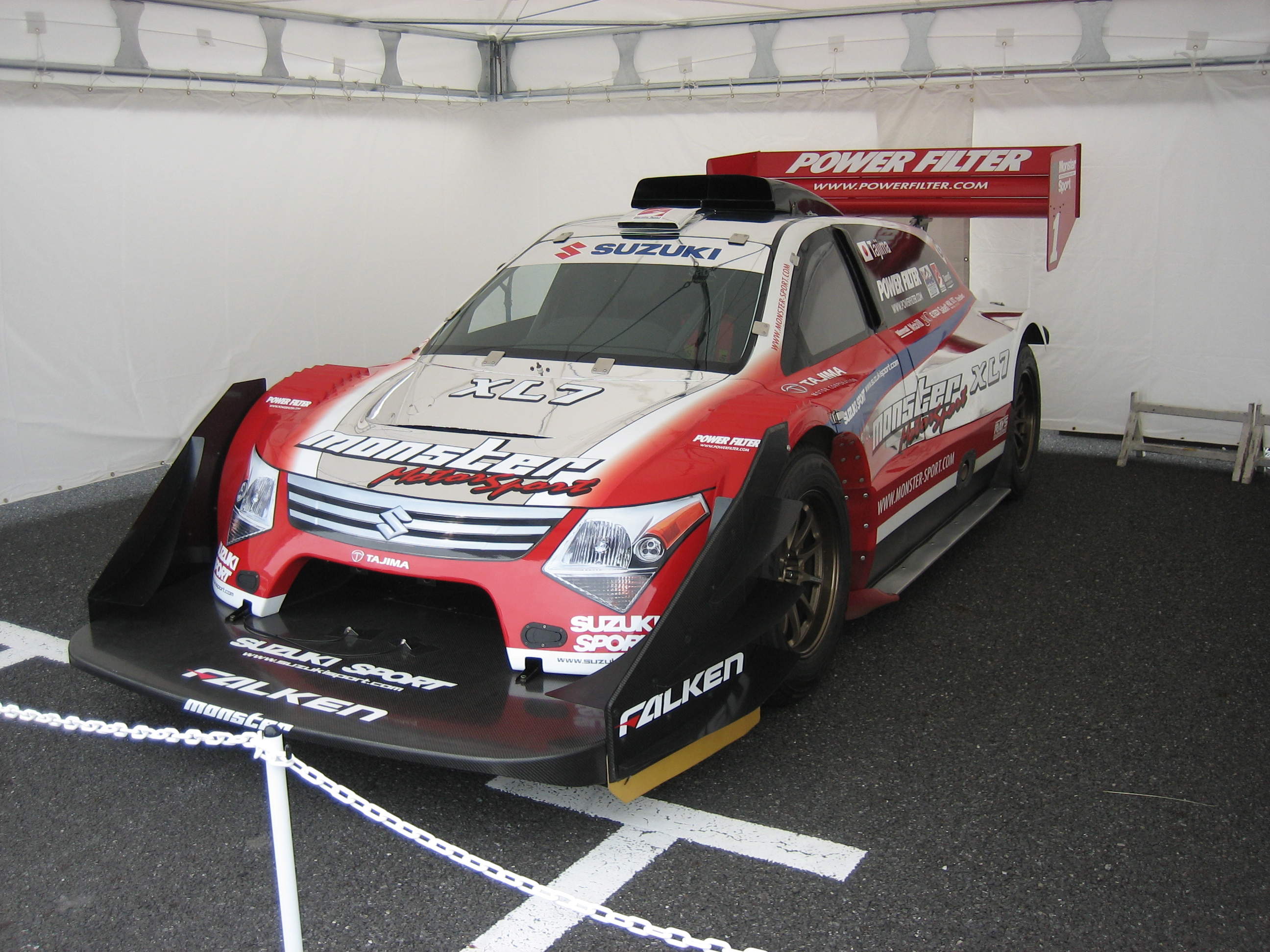
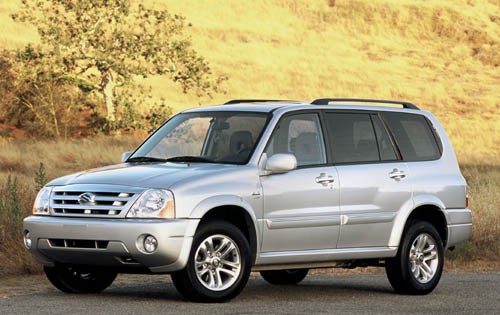
Suzuki XL7 Photo Gallery
The first-generation XL-7 was a Suzuki design and was essentially a stretched Grand Vitara. It had a Suzuki-designed 2.7 liter V6 on a rear wheel drive-based platform with optional four wheel drive. When introduced, the XL-7 was the least expensive SUV available with 3-row seating in North America. The Suzuki XL-7 sold over 20,000 a year, and was awarded the Consumer's Digest Best Buy award. However, sales slowed as competitors came out with SUVs with more features, lower prices, better fuel efficiency and more powerful engines, such as the Toyota Highlander, the Honda Pilot, and the Honda CR-V.
suzuki xl7
suzuki xl7 pics
suzuki xl7 images
suzuki xl7 interior
suzuki xl7 photo
suzuki xl7 swotti
suzuki xl7 2008
Wednesday, September 8, 2010
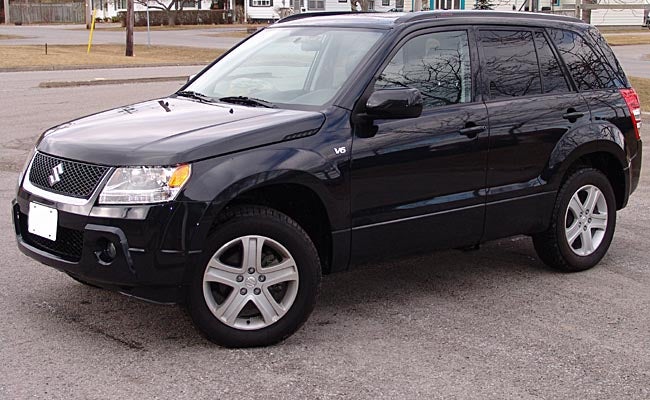
Suzuki Grand Vitara
The Suzuki Grand Vitara is a compact crossover SUV produced by the Japanese automaker Suzuki since 1999.
The first-generation Grand Vitara was a slightly larger, pricier and more powerful version of the Suzuki Vitara 4-door.
It was facelifted in 2002 and again in 2004. A rebadged version was sold in North America by General Motors as the Chevrolet Tracker. The Tracker is sold in Latin America, but Mexico, as Chevrolet Grand Vitara. In Mexico, Grand Vitara and Tracker are different vehicles, sold by Suzuki and Chevrolet respectively. In Chile, 5-door Grand Vitara is known as Grand Nomade.
suzuki grand vitara
suzuki grand vitara
suzuki grand vitara 2006
suzuki grand vitara
suzuki grand vitara
suzuki grand vitara 2008
suzuki grand vitara
The first-generation Grand Vitara was a slightly larger, pricier and more powerful version of the Suzuki Vitara 4-door.
It was facelifted in 2002 and again in 2004. A rebadged version was sold in North America by General Motors as the Chevrolet Tracker. The Tracker is sold in Latin America, but Mexico, as Chevrolet Grand Vitara. In Mexico, Grand Vitara and Tracker are different vehicles, sold by Suzuki and Chevrolet respectively. In Chile, 5-door Grand Vitara is known as Grand Nomade.
suzuki grand vitara
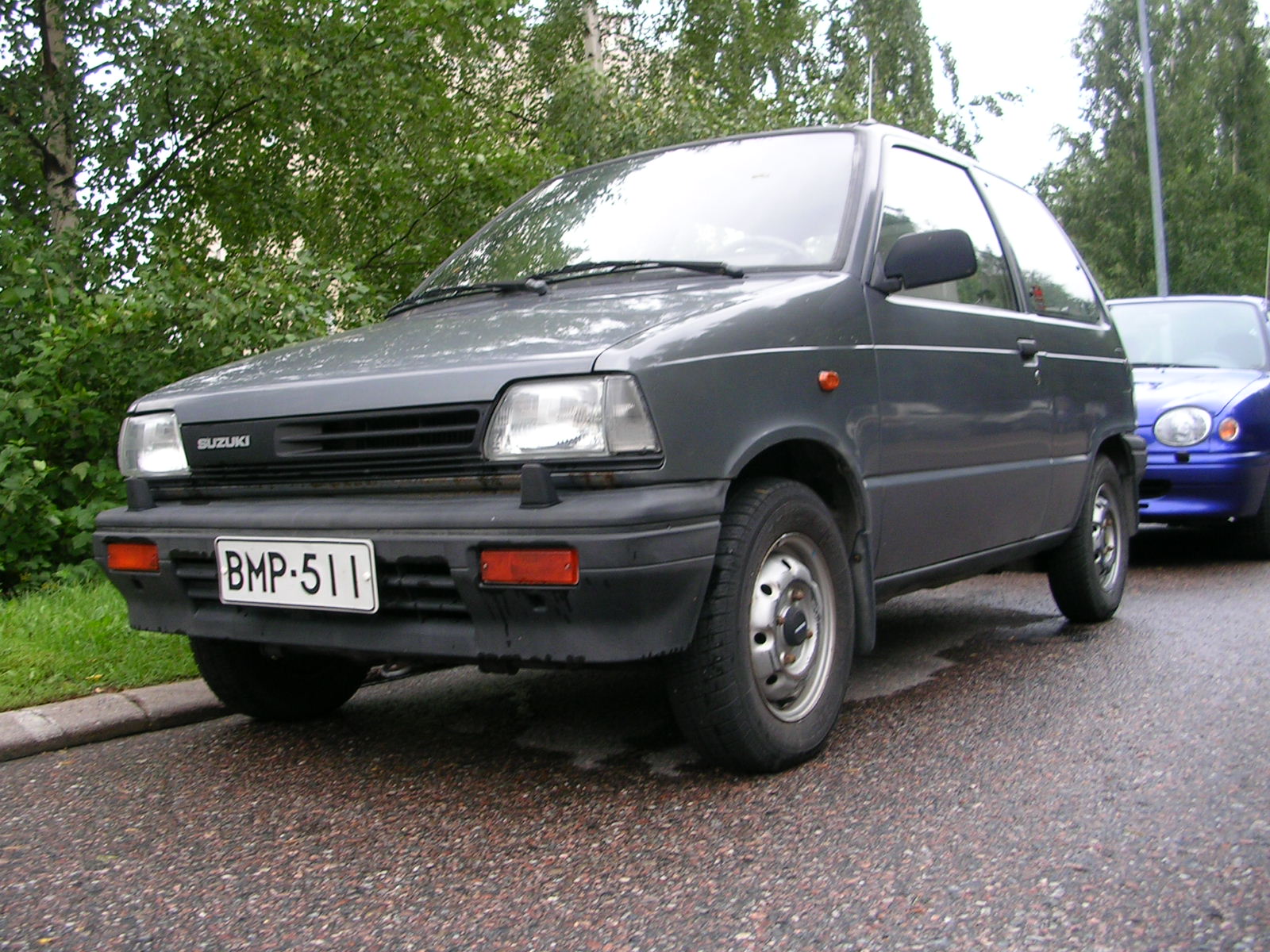
Suzuki Alto cars
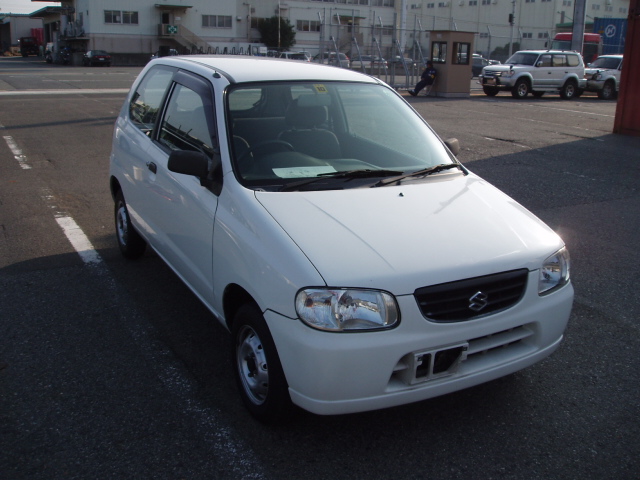
The Suzuki Alto is a small car (kei car) designed by Suzuki. Its selling points include low price and good fuel economy. The model was introduced in 1979 and has been built in many countries worldwide.
suzuki alto 2005
suzuki alto images
suzuki alto gallery
suzuki alto wiki
suzuki alto 2001
suzuki alto pics
suzuki alto 2009
Tuesday, September 7, 2010
Suzuki Samurai Wheels
The history of Suzuki four wheel drive cars goes back to 1968. Suzuki bought former Japanese automaker Hope Motor Company which had produced fifteen small off-road vehicles called the HopeStar ON360. Then in 1970, they produced the first "real" Suzuki 4x4. It was called the LJ10, and it had an air cooled, 359 cc, two-stroke, in-line two-cylinder engine. 1972 saw the introduction of the LJ20. The cooling was changed from air cooling to water cooling due to newly enacted emission regulations, and gained 3 hp. In 1975, Suzuki complemented the LJ20 with the LJ50, which had a larger 539 cc, two-stroke, in-line three-cylinder engine and bigger differentials. This was originally targeted at the Australian market, but more exports soon followed
Suzuki Samurai
Suzuki Samurai
Suzuki Samurai
Suzuki Samurai
Suzuki Samurai
Suzuki Cars 2011 2012
In 1909, Michio Suzuki (1887–1982) founded the Suzuki Loom Works in the small seacoast village of Hamamatsu, Japan. Business boomed as Suzuki built weaving looms for Japan's giant silk industry.[5] In 1929, Michio Suzuki invented a new type of weaving machine, which was exported overseas. Suzuki filed as many as 120 patents and utility model rights.[citation needed] The company's first 30 years focused on the development and production of these exceptionally complex machines.[citation needed]
Despite the success of his looms, Suzuki realized his company had to diversify and he began to look at other products. Based on consumer demand, he decided that building a small car would be the most practical new venture. The project began in 1937, and within two years Suzuki had completed several compact prototype cars. These first Suzuki motor vehicles were powered by a then-innovative, liquid-cooled, four-stroke, four-cylinder engine. It featured a cast aluminum crankcase and gearbox and generated 13 horsepower (9.7 kW) from a displacement of less than 800cc.
With the onset of World War II, production plans for Suzuki's new vehicles were halted when the government declared civilian passenger cars a "non-essential commodity." At the conclusion of the war, Suzuki went back to producing looms. Loom production was given a boost when the U.S. government approved the shipping of cotton to Japan. Suzuki's fortunes brightened as orders began to increase from domestic textile manufacturers. But the joy was short-lived as the cotton market collapsed in 1951.
Faced with this colossal challenge, Suzuki's thoughts went back to motor vehicles. After the war, the Japanese had a great need for affordable, reliable personal transportation. A number of firms began offering "clip-on" gas-powered engines that could be attached to the typical bicycle. Suzuki's first two-wheel ingenuity came in the form of a motorized bicycle called, the "Power Free." Designed to be inexpensive and simple to build and maintain, the 1952 Power Free featured a 36 cc, one horsepower, two-stroke engine.[6] An unprecedented feature was the double-sprocket gear system, enabling the rider to either pedal with the engine assisting, pedal without engine assist, or simply disconnect the pedals and run on engine power alone. The system was so ingenious that the patent office of the new democratic government granted Suzuki a financial subsidy to continue research in motorcycle engineering, and so was born Suzuki Motor Corporation.
In 1953, Suzuki scored the first of many racing victories when the tiny 60 cc "Diamond Free" won its class in the Mount Fuji Hill Climb.
Suzuki Cars
Suzuki Cars
Suzuki Cars
Suzuki Cars
Suzuki Cars
Despite the success of his looms, Suzuki realized his company had to diversify and he began to look at other products. Based on consumer demand, he decided that building a small car would be the most practical new venture. The project began in 1937, and within two years Suzuki had completed several compact prototype cars. These first Suzuki motor vehicles were powered by a then-innovative, liquid-cooled, four-stroke, four-cylinder engine. It featured a cast aluminum crankcase and gearbox and generated 13 horsepower (9.7 kW) from a displacement of less than 800cc.
With the onset of World War II, production plans for Suzuki's new vehicles were halted when the government declared civilian passenger cars a "non-essential commodity." At the conclusion of the war, Suzuki went back to producing looms. Loom production was given a boost when the U.S. government approved the shipping of cotton to Japan. Suzuki's fortunes brightened as orders began to increase from domestic textile manufacturers. But the joy was short-lived as the cotton market collapsed in 1951.
Faced with this colossal challenge, Suzuki's thoughts went back to motor vehicles. After the war, the Japanese had a great need for affordable, reliable personal transportation. A number of firms began offering "clip-on" gas-powered engines that could be attached to the typical bicycle. Suzuki's first two-wheel ingenuity came in the form of a motorized bicycle called, the "Power Free." Designed to be inexpensive and simple to build and maintain, the 1952 Power Free featured a 36 cc, one horsepower, two-stroke engine.[6] An unprecedented feature was the double-sprocket gear system, enabling the rider to either pedal with the engine assisting, pedal without engine assist, or simply disconnect the pedals and run on engine power alone. The system was so ingenious that the patent office of the new democratic government granted Suzuki a financial subsidy to continue research in motorcycle engineering, and so was born Suzuki Motor Corporation.
In 1953, Suzuki scored the first of many racing victories when the tiny 60 cc "Diamond Free" won its class in the Mount Fuji Hill Climb.
Sunday, September 5, 2010
Renault Megane Sport
Renault has unveiled the new Megane Renault Sport at the 2009 Geneva Motor Show that comeswith two chassis choices, Sport and Cup limited slip differential for better traction.
The new Renault Megane Renault Sport is powered by a new-generation 2.0-liter turbocharged petrol engine that produces maximum power of 250 hp (184 kW) at 5,500 rpm and 340 Nm of maximum torque at 3,000 rpm (20 hp and 40 Nm more than the Megane R26.R). The engine is mated to a six-speed manual gearbox.
The new Megane Renault Sport still uses the same suspension system as the current Megane Renault Sport where the suspension and steering functions have been separated to ensure a particularly high standard of handling and traction performance thanks to an independent steering axis layout at the front. The Renault Sport is equipped with power steering that could be fully disconnected for the track.
At the exterior, the Renault Megane Renault Sport features front bumper with integrated LED daytime running lights and splitter, widened sills, central exhaust tailpipe, rear diffuser and 18-inch aluminum alloy rims.
Inside, the Megane Renault Sport features seats with extra lateral support, analogue rev-counter with visual and audible gearshift indicator, aluminum pedal cover and Renault Sport badge on the headrests, rev-counter background and dashboard.
The new Renault Megane Renault Sport is powered by a new-generation 2.0-liter turbocharged petrol engine that produces maximum power of 250 hp (184 kW) at 5,500 rpm and 340 Nm of maximum torque at 3,000 rpm (20 hp and 40 Nm more than the Megane R26.R). The engine is mated to a six-speed manual gearbox.
The new Megane Renault Sport still uses the same suspension system as the current Megane Renault Sport where the suspension and steering functions have been separated to ensure a particularly high standard of handling and traction performance thanks to an independent steering axis layout at the front. The Renault Sport is equipped with power steering that could be fully disconnected for the track.
At the exterior, the Renault Megane Renault Sport features front bumper with integrated LED daytime running lights and splitter, widened sills, central exhaust tailpipe, rear diffuser and 18-inch aluminum alloy rims.
Inside, the Megane Renault Sport features seats with extra lateral support, analogue rev-counter with visual and audible gearshift indicator, aluminum pedal cover and Renault Sport badge on the headrests, rev-counter background and dashboard.
Wallpapers Renault Megane Sport
Subscribe to:
Posts (Atom)